
Monday - Saturday9AM - 9PM
LocationsChennai I Puducherry I Coimbatore I Salem I Hosur I Trichy I Madurai I Kerala I Andra





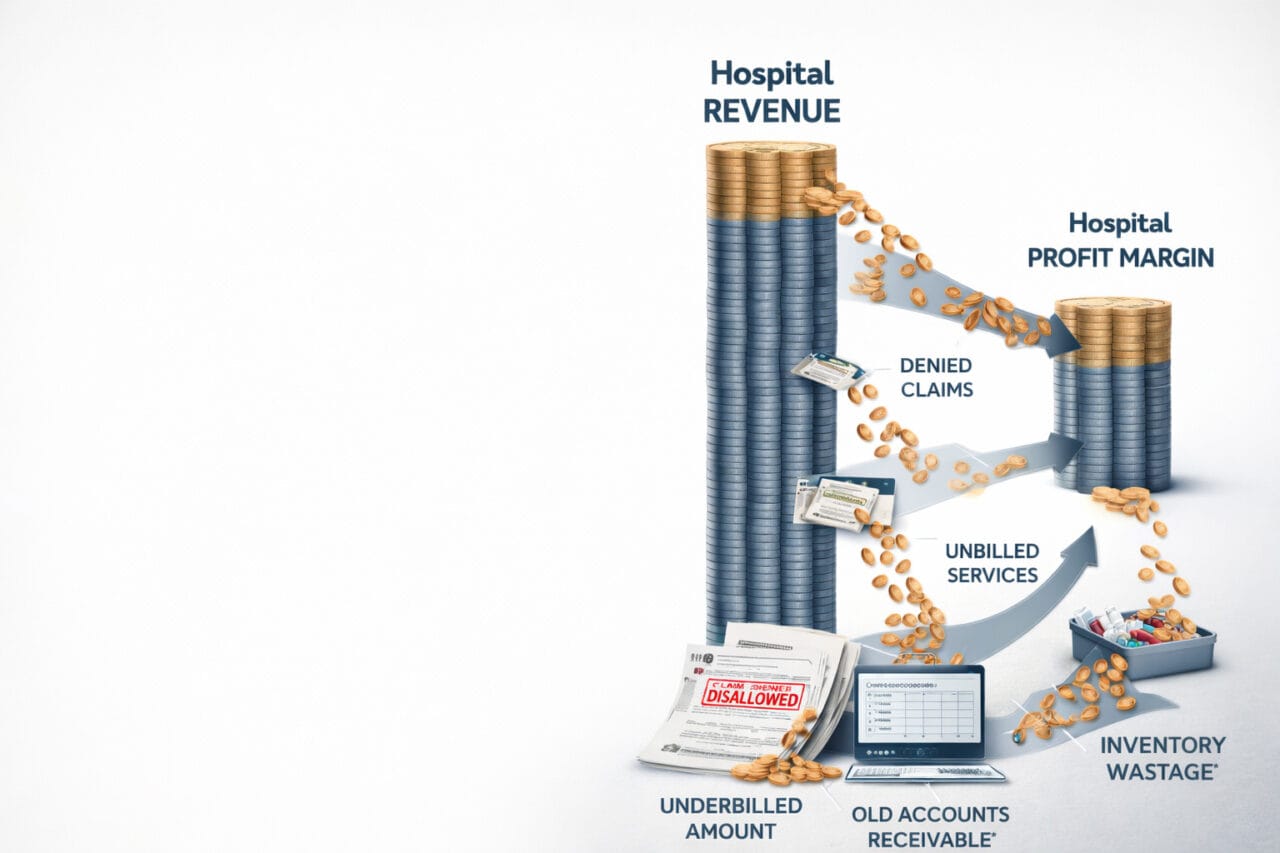







A hospital gap analysis is a structured assessment that identifies the difference between your hospital’s current operational performance and its desired performance goals. It helps detect hidden inefficiencies, billing errors, workflow bottlenecks, compliance gaps, and underutilized resources so that corrective actions can be taken before they affect performance or patient care.
A hospital should conduct a gap analysis when:
Conducting a gap analysis early helps prevent operational disruptions and financial losses.
A hospital gap analysis typically evaluates:
This comprehensive review helps identify performance gaps across clinical, administrative, and financial functions.
The duration of a hospital gap analysis depends on the size and complexity of the hospital. In most cases:
A structured gap analysis is designed to deliver quick, practical insights without disrupting daily operations.
A hospital audit typically focuses on verifying compliance or financial accuracy, while a gap analysis focuses on identifying operational inefficiencies and performance improvement opportunities.
A gap analysis is more strategic and forward-looking, helping hospitals improve performance, prepare for growth, and strengthen operational stability.
Yes. A hospital gap analysis often identifies hidden revenue leakage caused by:
Correcting these gaps can significantly improve revenue realization and financial performance.
Yes — conducting a gap analysis before expansion is strongly recommended. It helps ensure that:
This reduces the risk of operational disruption during expansion.
No. A structured gap analysis is designed to work alongside normal hospital operations. The assessment team observes workflows, reviews records, and interacts with staff without interrupting patient care or daily activities.
After the gap analysis, the hospital receives:
This enables leadership to take informed, targeted actions to improve operations and financial performance.