“`html
Toxic Element Testing for Factory Workers: What High-Risk Industries Should Know
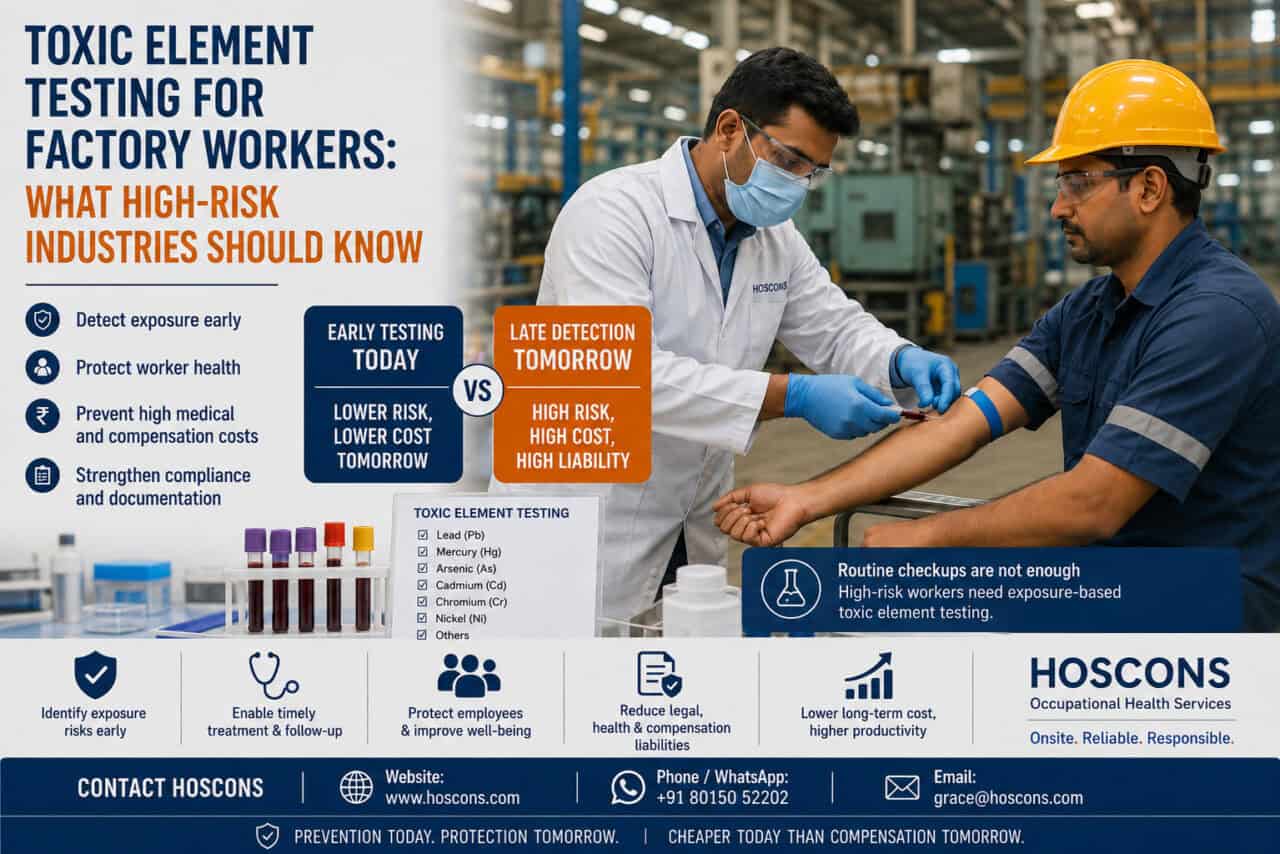
Toxic element testing is an important part of occupational health surveillance for factory workers who may be exposed to metals, chemicals, fumes, dust, solvents or other industrial hazards. In many high-risk industries, routine annual medical examinations may not be enough to identify workplace exposure-related health risks.
Workers exposed to lead, mercury, arsenic, cadmium, chromium, nickel and other toxic elements may not show immediate symptoms. Health effects may develop slowly over time, and by the time symptoms become visible, the condition may already require more serious medical attention.
For employers, early toxic element testing is not only an employee welfare measure. It is also a practical risk-control strategy that can help reduce future health complications, productivity loss, legal exposure, compensation claims and reputational damage.
It is always better and cheaper to identify toxic exposure early and guide treatment than to discover it late after serious employee illness, workplace complaints, compensation claims or legal escalation.
Key Highlights of Toxic Element Testing for Industries
Early Risk Detection
Toxic element testing helps identify exposure-related risks before they become severe health conditions.
High-Risk Worker Screening
Testing can be planned for workers exposed to metals, chemicals, solvents, fumes, dust or hazardous processes.
Beyond Routine Checkups
Routine CBC, sugar, cholesterol and urine tests may not detect toxic element exposure risks.
Employer Risk Control
Early screening supports prevention, documentation, medical follow-up and long-term liability reduction.
Occupational Surveillance
Toxic element testing helps convert annual medical examination into meaningful exposure-based surveillance.
Follow-Up Guidance
Abnormal findings can be reviewed and followed up with counselling, referral guidance and workplace action.
Why Routine Health Checkups May Miss Toxic Exposure Risks
Many annual health checkup programs include basic investigations such as blood count, blood sugar, lipid profile, urine test, ECG, vision screening and doctor consultation. These tests are useful for general health screening, but they may not detect toxic element exposure.
A worker exposed to lead, mercury, arsenic, cadmium or other toxic elements may require specific exposure-based testing. Without these tests, the employee may appear generally fit while an occupational exposure risk remains undetected.
Routine Health Checkup
- General blood tests
- Basic urine tests
- Vitals and physical examination
- Limited exposure-risk focus
- May miss toxic element exposure
Exposure-Based Screening
- Test package based on workplace risk
- Lead in blood where relevant
- Heavy metal and toxic element testing
- Department-wise risk screening
- Follow-up for abnormal findings
What Is Toxic Element Testing?
Toxic element testing refers to laboratory investigations used to identify the presence or level of harmful metals or elements in the body. These tests are usually planned based on workplace exposure, job role, process risk and occupational health requirement.
Depending on the industry and exposure profile, toxic element testing may include screening for elements such as:
- Lead
- Mercury
- Arsenic
- Cadmium
- Chromium
- Nickel
- Other exposure-related toxic elements based on workplace risk
These tests should not be selected randomly. They should be planned based on a proper understanding of the workplace process, materials handled, exposure route and risk category of employees.
The right test should be based on the worker’s exposure risk, not just a standard health checkup package.
Which Workers May Need Toxic Element Testing?
Toxic element testing may be relevant for factory workers and industrial employees who work in areas where exposure to metals, fumes, dust, chemicals, solvents or hazardous raw materials is possible.
The need for testing should be decided based on the workplace hazard, department, job role and exposure profile.
- Workers exposed to lead-based materials, batteries, paints or metal processes
- Employees working in metal processing, welding, plating or foundry areas
- Workers exposed to fumes, dust, powders or chemical residues
- Employees handling solvents, pigments, industrial chemicals or hazardous materials
- Maintenance workers exposed to contaminated surfaces or old industrial materials
- Workers in recycling, e-waste, battery, printing, paint, ceramic or related industries
- Employees in high-risk departments identified by EHS or occupational health teams
Not every employee may need the same testing. A risk-based approach helps the employer screen the right group of workers with the right investigations.
Early Detection Is Cheaper Than Delayed Diagnosis and Compensation
Toxic exposure-related illness can become expensive when it is identified late. By the time symptoms become serious, the employee may need specialist consultation, repeated investigations, long-term treatment, work restriction, leave, compensation consideration or legal review.
For the employer, delayed detection can lead to multiple costs beyond medical expenses.
- Employee illness and suffering
- Loss of productivity and absenteeism
- Workplace complaints and employee dissatisfaction
- Higher treatment and referral costs
- Audit and compliance concerns
- Legal and compensation exposure
- Reputation risk for the organisation
- Management time spent on damage control
Preventive testing costs far less than delayed diagnosis, long-term illness, compensation claims and reputational damage.
How Toxic Element Testing Protects Both Employees and Employers
Toxic element testing should be viewed as a preventive occupational health measure. It helps employees receive early guidance and helps employers demonstrate that workplace health risks are being monitored responsibly.
Employee Protection
- Early identification of exposure risk
- Timely medical counselling
- Referral guidance where required
- Work restriction or reassignment advice where needed
- Better long-term health protection
Employer Protection
- Better occupational health documentation
- Early corrective action support
- Reduced long-term liability risk
- Support during audits and EHS reviews
- Stronger employee welfare credibility
Toxic Element Testing Should Be Risk-Based, Not Same for Everyone
A common mistake in annual medical examination programs is offering the same test package to all employees. In factories, this approach may not be suitable because risk levels differ from one department to another.
Employees working in administration may need a general health package, while workers exposed to metals, chemicals, fumes, dust or solvents may need exposure-linked medical testing.
A risk-based toxic element testing plan should consider:
- Nature of industry
- Raw materials used
- Work process and exposure route
- Employee job role
- Department-level hazard profile
- Duration and frequency of exposure
- Previous health findings or abnormal reports
- EHS and occupational health recommendations
This approach helps employers avoid unnecessary testing for low-risk employees while ensuring that high-risk employees receive appropriate screening.
Why Sample Traceability and Transparent Testing Matter
In toxic element testing, accuracy, sample identification and traceability are extremely important. Employers should have confidence that the right sample belongs to the right employee and that the testing process is properly coordinated.
HOSCONS supports structured onsite medical examination programs with organised employee registration, sample handling, barcode-based tracking where applicable and clear reporting coordination.
- Structured employee registration
- Employee-wise test mapping
- Barcode-based sample tracking where applicable
- Organised sample handling and coordination
- Transparent testing workflow based on agreed scope
- Improved confidence in employee reports
When the testing process is traceable, employers gain better confidence in the quality and authenticity of employee health reports.
What Should Employers Do After Abnormal Toxic Element Findings?
Toxic element testing becomes meaningful only when abnormal findings are reviewed and acted upon. Reports should not be filed without follow-up.
Depending on the level of abnormality, workplace risk and medical recommendation, employers may need to initiate a structured follow-up process.
- Review abnormal findings with qualified medical professionals
- Inform and counsel the employee appropriately
- Recommend specialist referral where required
- Assess whether workplace exposure control needs improvement
- Consider repeat testing or periodic monitoring where required
- Review PPE compliance and engineering controls
- Maintain proper documentation of follow-up action
- Coordinate with EHS, HR and OHC teams for corrective measures
Early action protects the employee and helps the employer demonstrate responsible occupational health management.
How HOSCONS Supports Toxic Element Testing for Industries
HOSCONS helps industries move from routine health checkup camps to exposure-based occupational health surveillance, where high-risk workers are screened for real workplace health risks before they become serious liabilities.
Our occupational health approach combines onsite execution, risk-based medical examination planning, test coordination, sample traceability, reporting support and follow-up guidance.
- Onsite annual medical examination planning
- Risk-based test package design
- Toxic element testing coordination for relevant worker groups
- Lead in blood and heavy metal testing support where required
- Digitalised workflow and sample tracking where applicable
- Management-level summary reports
- Abnormal finding review and follow-up guidance
- Occupational Health Centre integration where available
- Support for multi-location industries across South India
HOSCONS helps industries identify toxic exposure risks early, protect workers and reduce the possibility of bigger future costs.
Explore Related HOSCONS Occupational Health Services
Industries looking to strengthen employee health surveillance can also explore our related occupational health services:
Final Thought
Toxic element testing should not be seen as an optional extra for high-risk industries.
It is a preventive occupational health investment that helps identify exposure risks early, guide timely treatment, protect employees and reduce future employer liability.
Early testing is always safer and more cost-effective than delayed diagnosis, employee suffering, compensation claims and damage control.
Plan Toxic Element Testing for High-Risk Workers
If your organisation has workers exposed to metals, chemicals, fumes, dust, solvents or hazardous materials, HOSCONS can help you plan risk-based toxic element testing as part of your annual medical examination or occupational health surveillance program.
Contact HOSCONS to discuss onsite medical checkups, toxic element testing, lead in blood testing, exposure-based medical screening, employee reports and management health analysis.
WhatsApp: Chat with HOSCONS I Email: grace@hoscons.com I Website: www.hoscons.com
Send Your Toxic Element Testing Requirement
Share your industry type, workforce size, exposure category and testing requirement. Our team will get in touch with you.
Frequently Asked Questions
What is toxic element testing?
Toxic element testing is used to detect harmful metals or elements such as lead, mercury, arsenic, cadmium, chromium, nickel or other exposure-related elements in employees based on workplace risk.
Why is toxic element testing important for factory workers?
Factory workers exposed to metals, chemicals, fumes, dust or hazardous materials may develop exposure-related health risks over time. Early testing helps identify risks before they become serious.
Are routine annual health checkups enough to detect toxic exposure?
Not always. Routine tests may not identify toxic element exposure. High-risk workers may need specific exposure-based tests such as lead in blood or heavy metal testing.
Which industries may need toxic element testing?
Industries involving batteries, paints, metal processing, plating, foundries, welding, chemicals, recycling, e-waste, ceramics, printing and similar processes may need risk-based toxic element screening.
How does early testing reduce employer risk?
Early testing helps detect exposure risks, guide treatment, improve workplace controls, maintain documentation and reduce the chance of delayed diagnosis, compensation claims and legal escalation.
How can HOSCONS support toxic element testing?
HOSCONS can help industries plan risk-based toxic element testing, coordinate onsite medical checkups, support sample tracking, provide reports, review abnormal findings and guide follow-up action.
“`